Build a solar system, then break it
Start with ours or roll a new one from a whole galaxy of stars. Pick the star, shape every world, then send them crashing into each other.
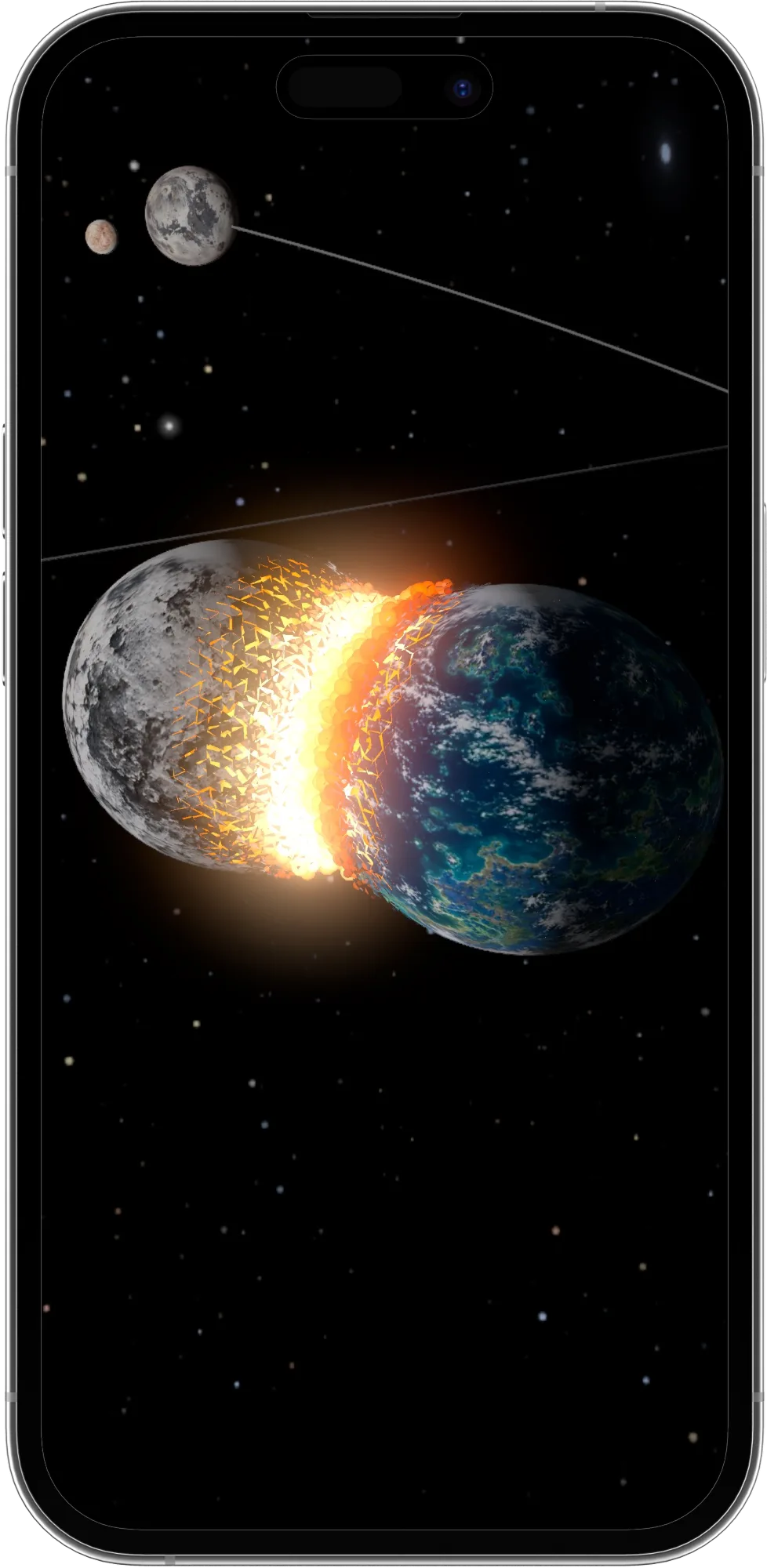
Smash planets and watch the chaos
Every star, planet and moon pulls on every other, so nothing in the system is safe. Send one world into another and watch them stretch and collide in a storm of lava. The lava orbits the star, cools to rock and rains down on the worlds around it, so one crash sets off the next.
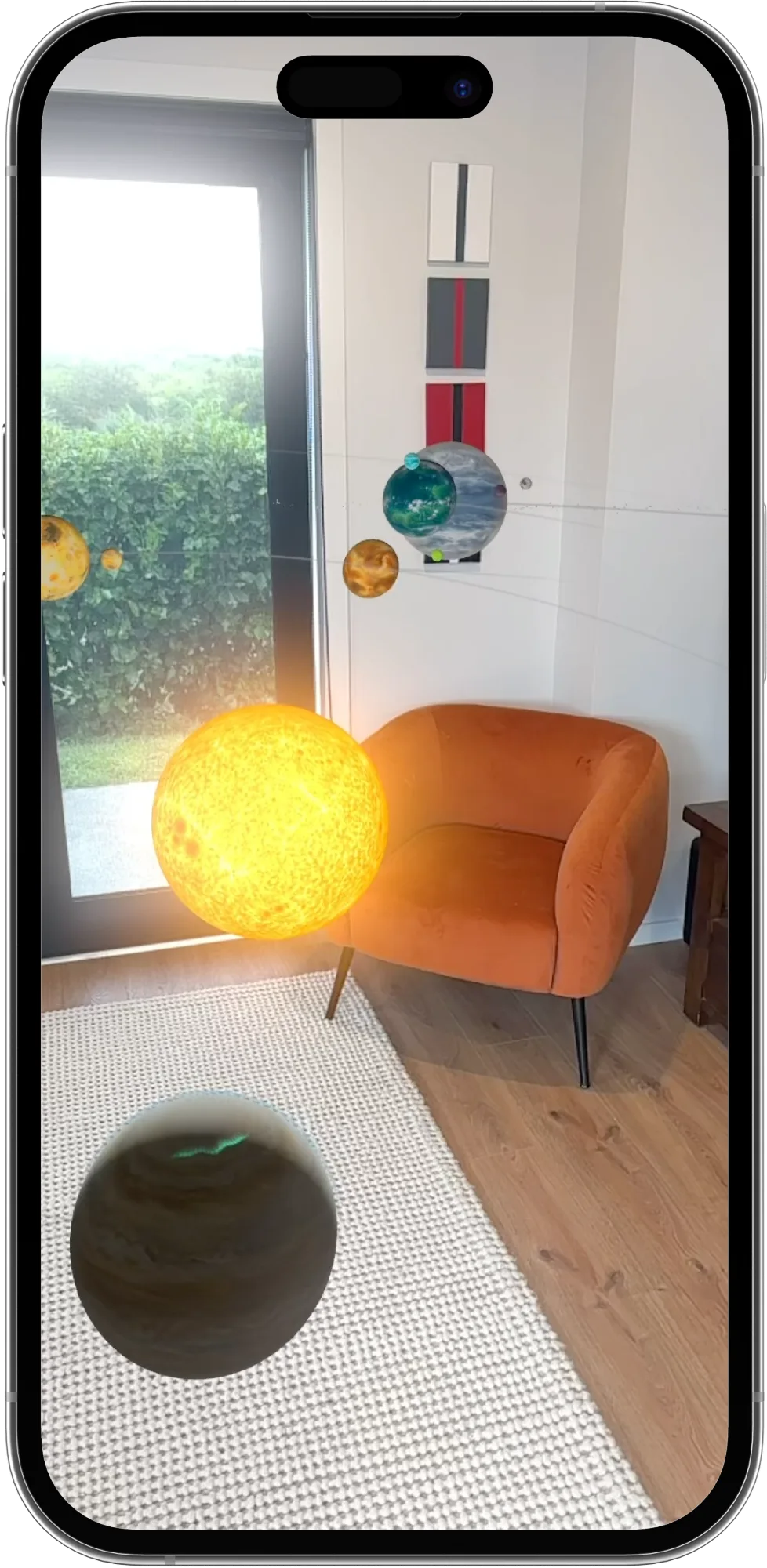
Crash planets on your coffee table
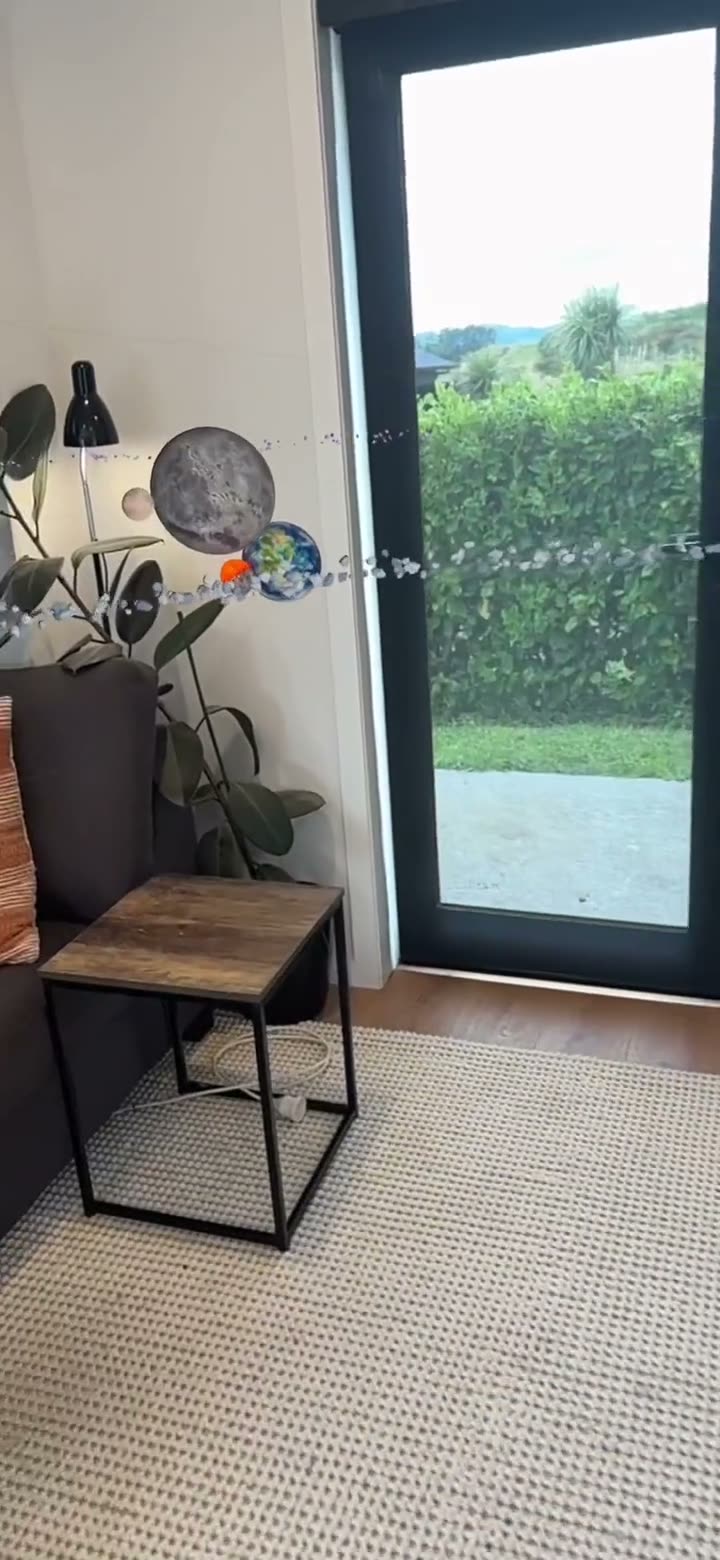
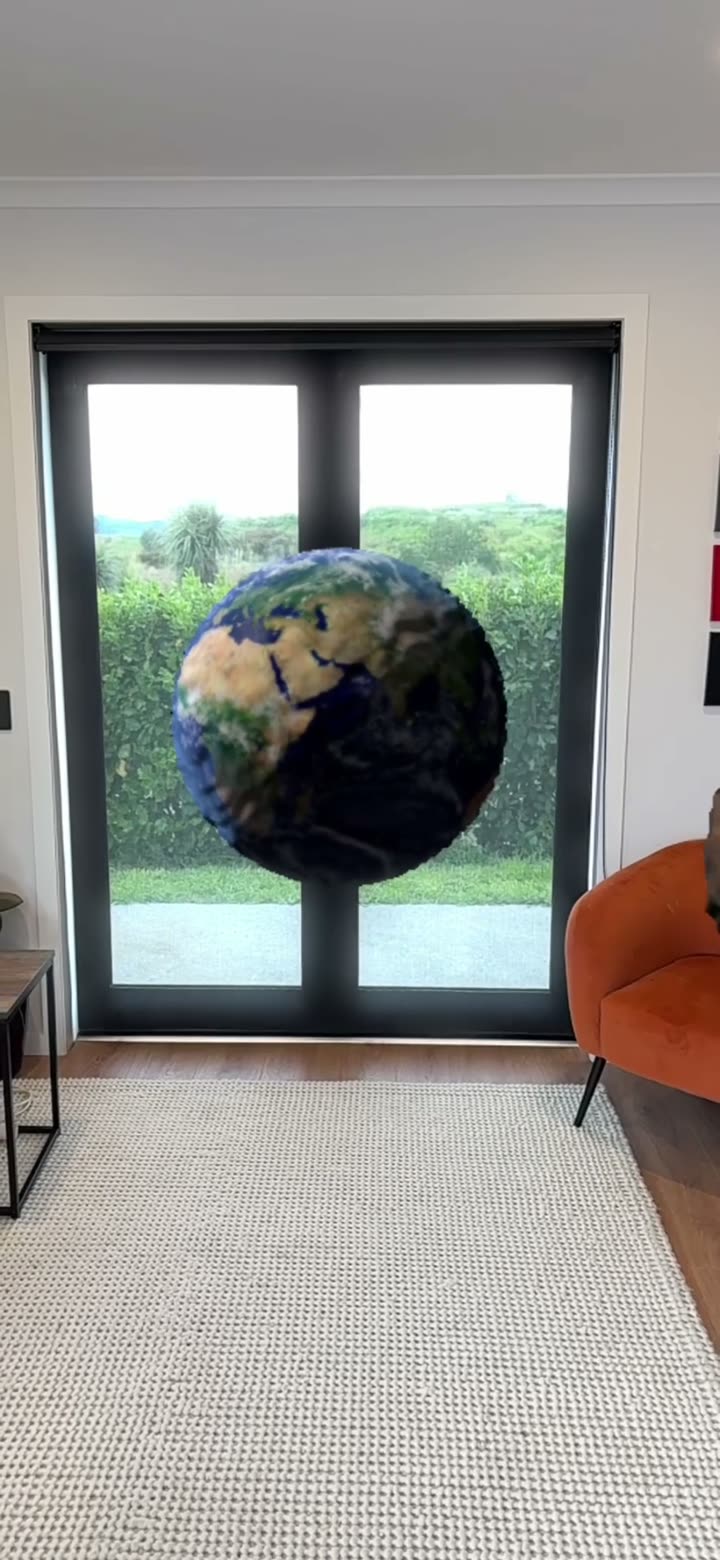
Tap AR and the whole system lands on a real table in front of you. Walk right up to two planets about to collide, crouch down to watch the lava sweep past at eye level, then pinch it bigger and circle the wreckage.
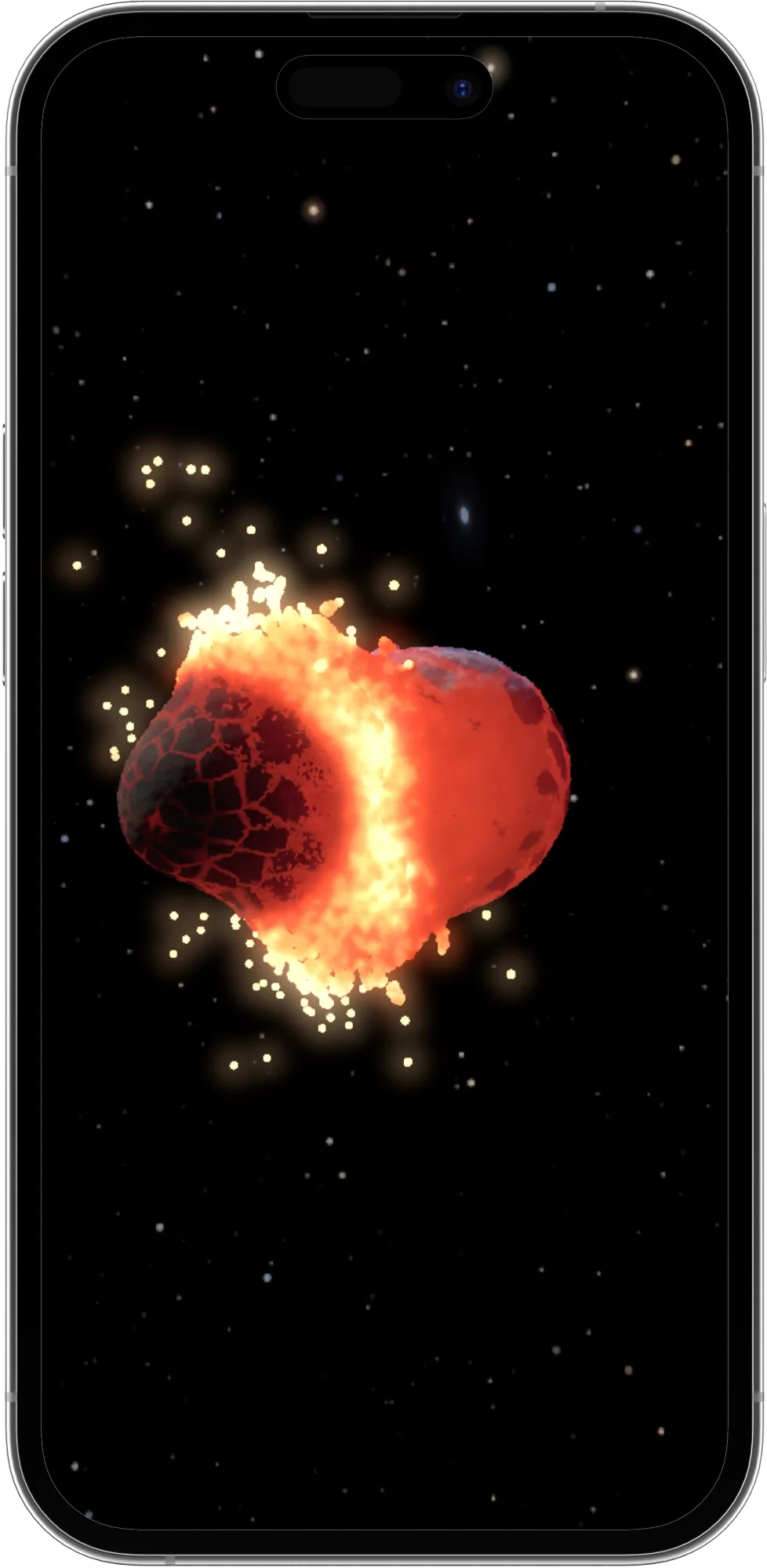
Collide worlds with real fluid physics
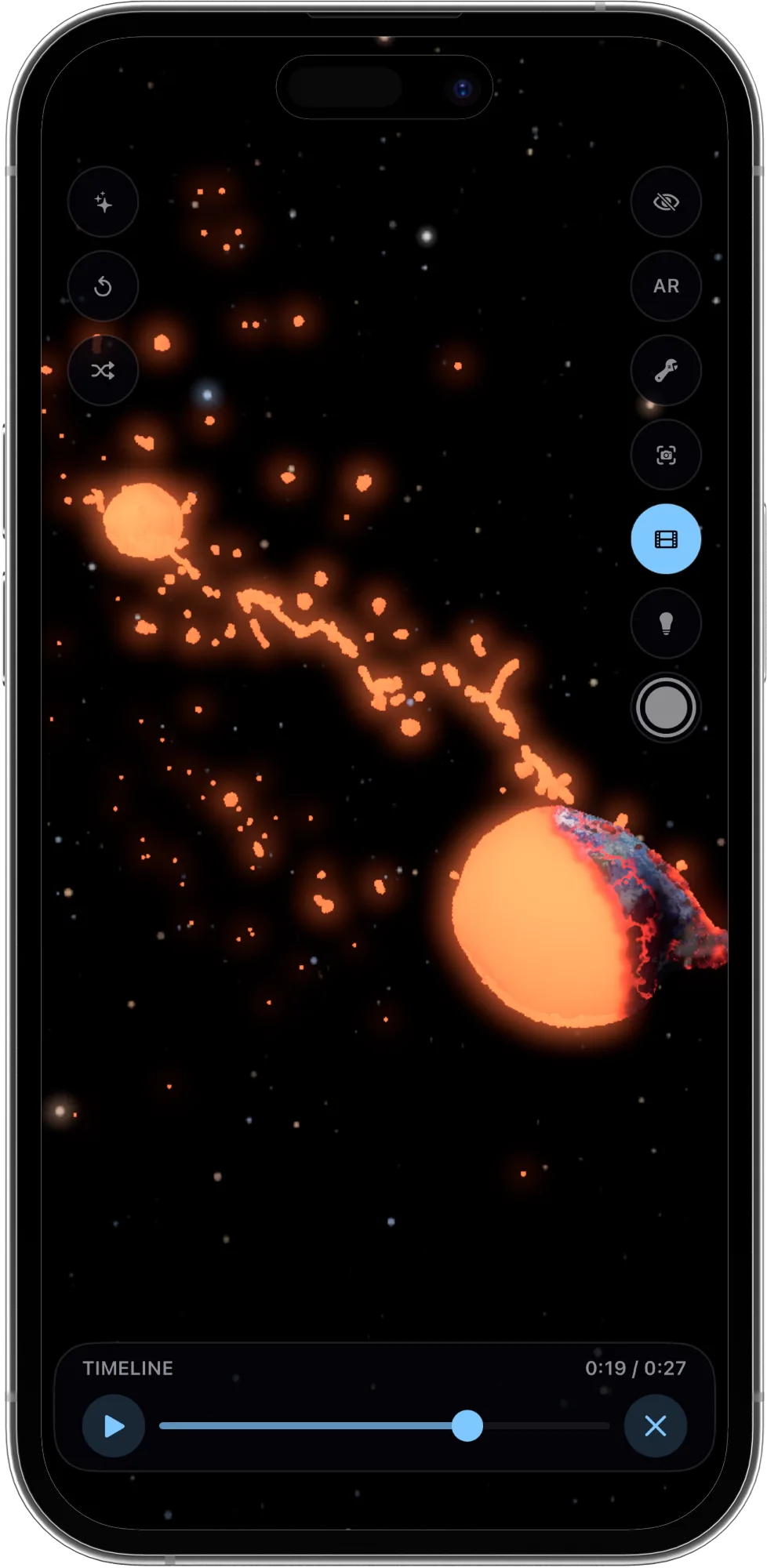
In Fluid Collisions two worlds meet as thousands of liquid particles under their own gravity, simulated live on your iPhone, so no two crashes are the same. A graze drags out a glowing arm and a head-on hit splashes both into a molten cloud. Or stage the impact thought to have made our Moon.
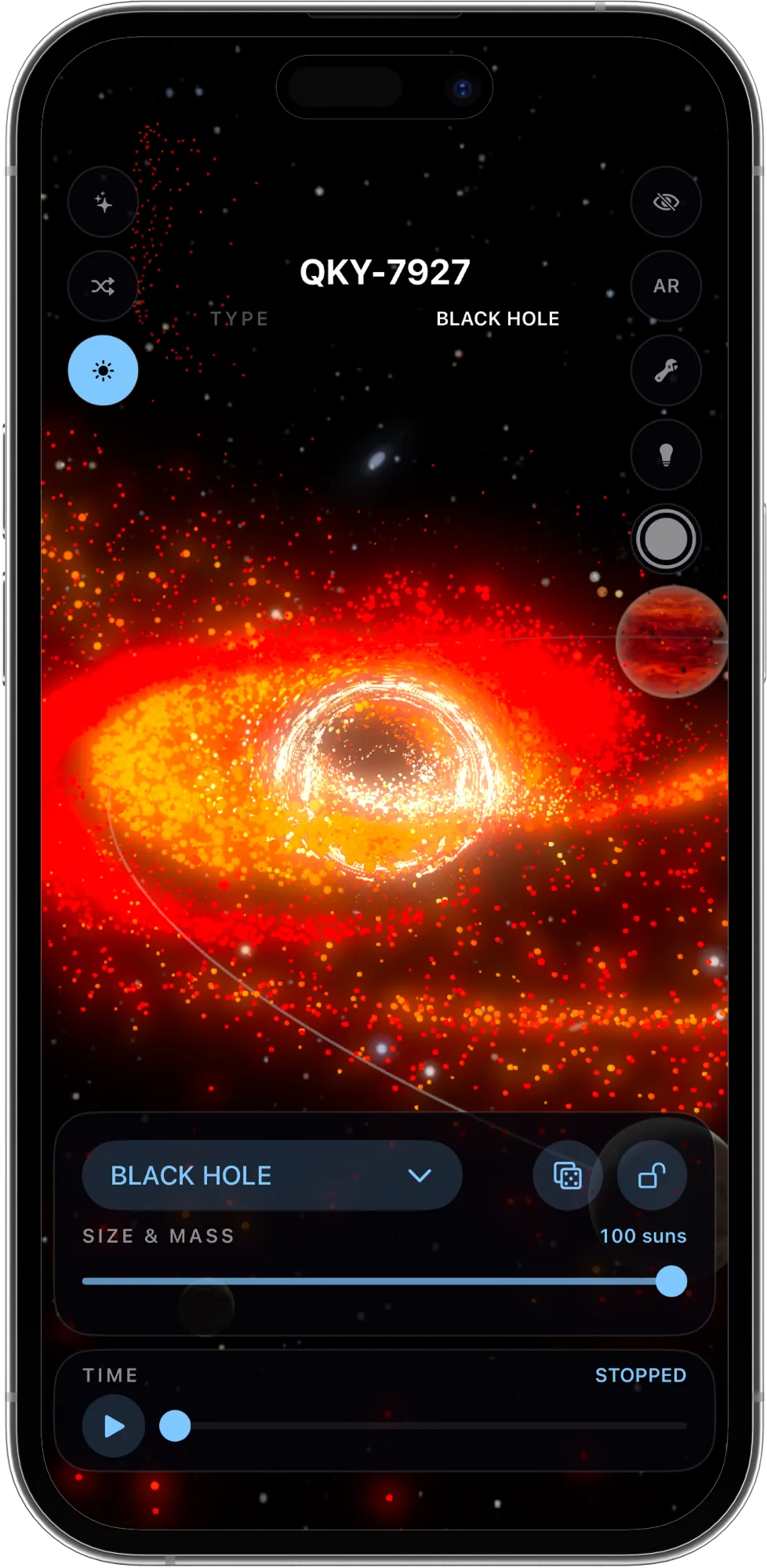
Swap the sun for a black hole
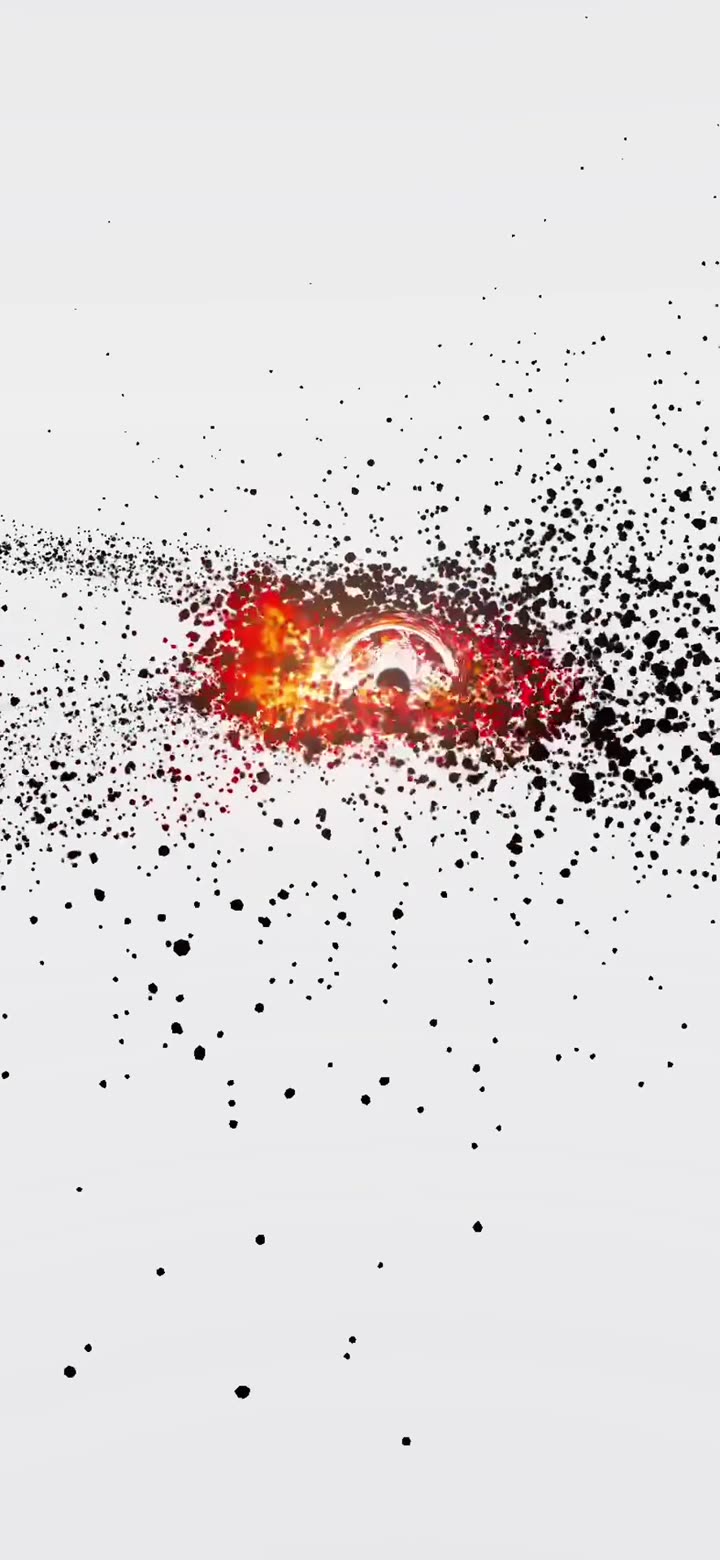
Trade the sun for any of fourteen kinds of star, from red dwarfs to blue supergiants, neutron stars, pulsars and magnetars. Or make it a black hole that bends the starlight behind it and heats the debris spiralling in until it glows white-hot.
Build the worlds you want to break
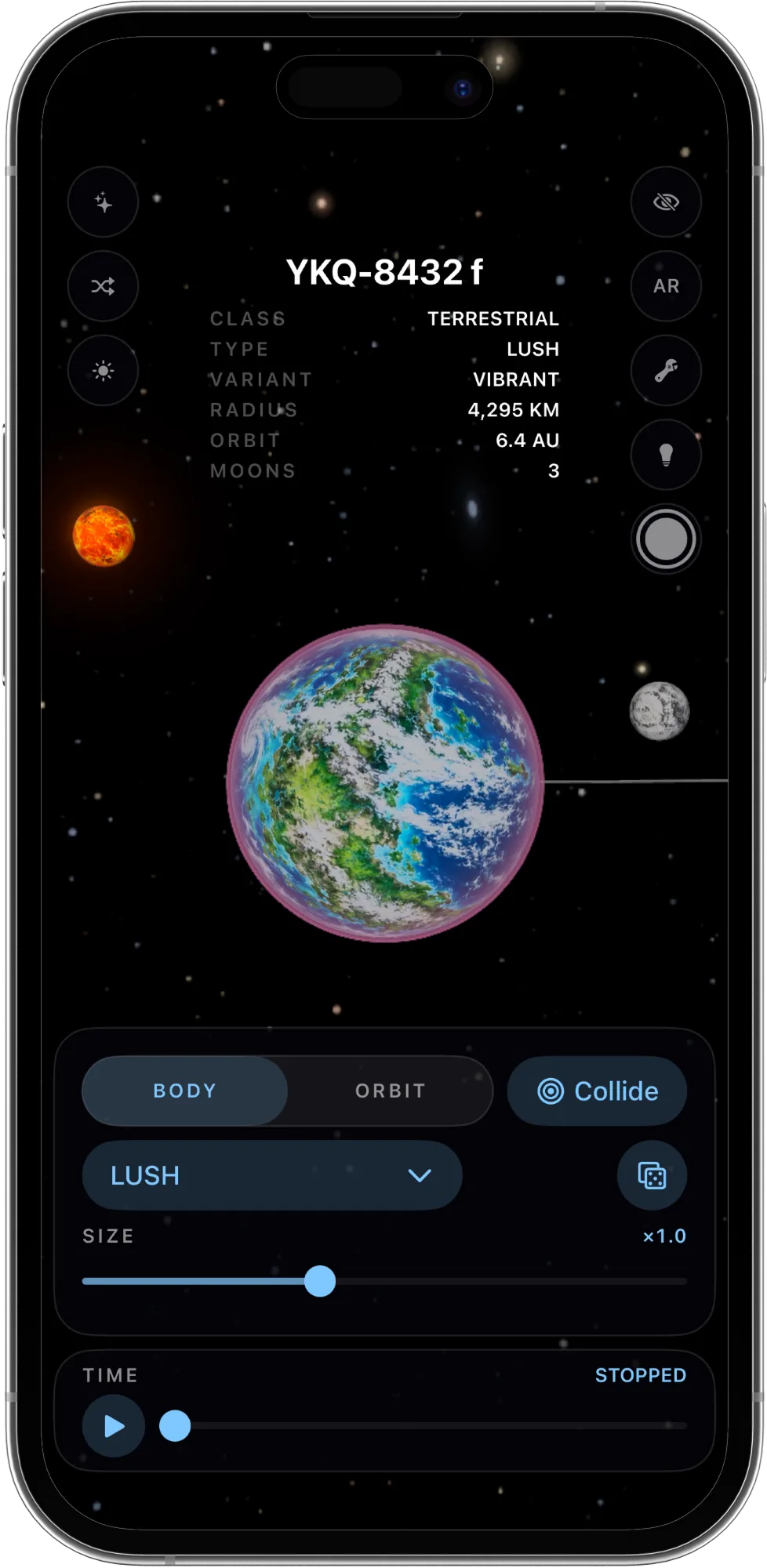
Turn any planet or moon into another kind of world, from lush and ocean worlds to crystalline ones and gas giants, set its size, or roll the dice for a fresh one. Its mass follows its size, so a bigger world hits harder.
Compute a crash in cinematic detail
Cinematic mode works a collision through at up to 128,000 particles, far more than a phone can run live, then hands you a full minute of it to play back and scrub at full frame rate.